
22
2025
-
12
Membrane analysis technology: A New Solution for Cost Reduction and Efficiency Improvement in Waste Acid Treatment
Author:
In industrial fields such as steel pickling, metal surface treatment, and chemical synthesis, the extensive application of strong acids like hydrochloric acid and sulfuric acid inevitably generates a large amount of high-concentration waste acid. The traditional lime neutralization method and evaporation concentration method not only have high treatment costs but also pose the risk of secondary pollution. Membrane analysis technology, relying on its unique ion-selective migration mechanism, offers a low-cost and low-energy consumption innovative solution for the resourceful treatment of waste acid, helping enterprises achieve a win-win situation of environmental and economic benefits.
I. Traditional waste acid treatment: Trapped in the dual predicament of high cost and secondary pollution
At present, most acid-consuming enterprises still adopt neutralization precipitation or evaporation concentration processes to treat waste acid. The lime neutralization method requires a large amount of alkaline agents such as calcium hydroxide. The cost of treating each ton of waste acid is as high as 500 to 800 yuan. Moreover, the solid wastes such as calcium sulfate and calcium chloride produced need to be disposed of in accordance with hazardous waste standards, further increasing the treatment expenses of enterprises.
The evaporation concentration method is difficult to popularize due to its large equipment investment scale and high energy consumption (0.3 to 0.5 tons of steam are consumed for the evaporation of each ton of waste acid). Especially when dealing with complex waste acids containing organic matter or metal ions, the equipment is prone to scaling, leading to frequent shutdowns and significantly increasing maintenance costs.
More importantly, traditional processing methods cannot achieve resource recycling. The free acid and metal ions in the waste acid are converted into low-value products, resulting in a large waste of recyclable resources. Take a certain steel pickling enterprise as an example. The content of free hydrochloric acid in the annual discharged waste acid is 15% to 20%. If it is directly neutralized and treated, it is equivalent to losing industrial hydrochloric acid worth several million yuan every year.
Ii. Principle of Membrane Chromatography Technology: The "intelligent screening" mechanism of ion migration
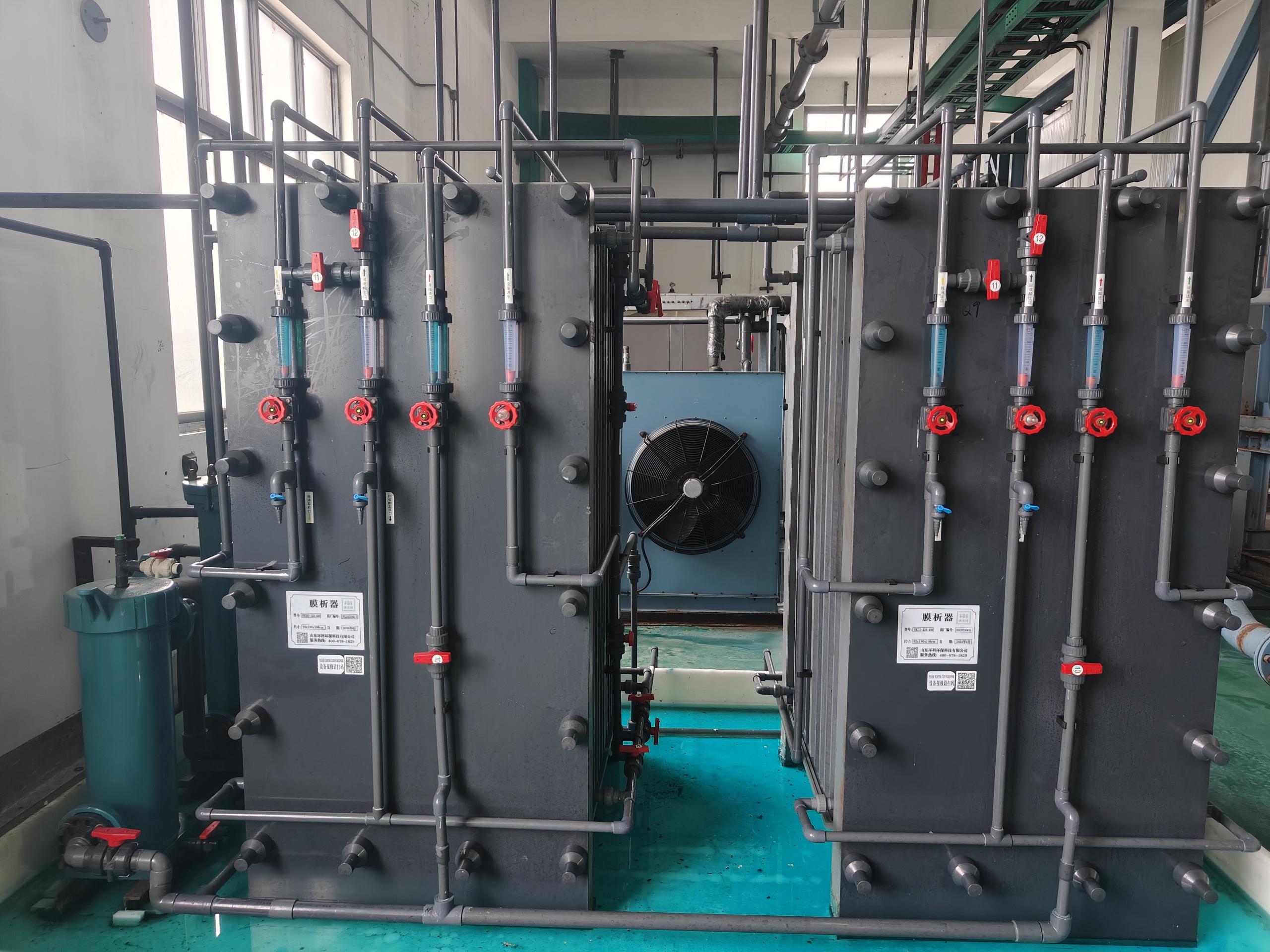
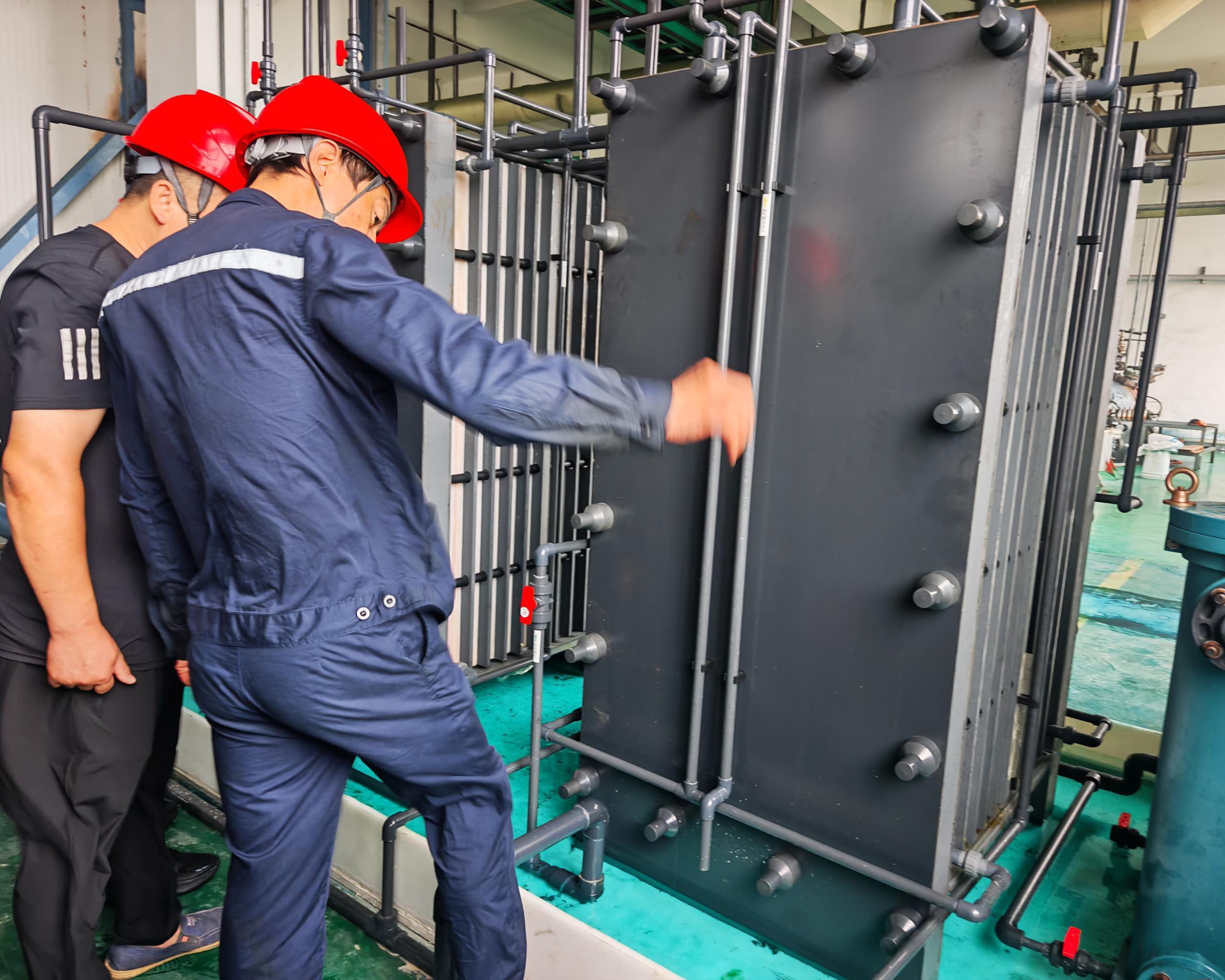
The core of membrane chromatography technology lies in leveraging the selective permeability of semi-permeable membranes to drive the directional migration of ions through concentration differences. Its working mechanism consists of three key steps:
The selective barrier effect of the membrane is achieved by using anion exchange membranes functionalized with quaternary ammonium groups and other types. The membrane surface carries a positive charge, allowing only anions such as chloride ions and sulfate ions to pass through, while blocking cations such as iron ions and copper ions as well as large-molecule organic substances. This "anion channel" design enables free acid radical ions in the waste acid to migrate to the dialysis liquid side, while metal ions are retained on the raw material side.
The passive migration process system driven by concentration difference consists of a waste acid chamber and a receiving liquid chamber (generally deionized water), with a concentration difference of 10 to 20 times between the two chambers. Under the effect of the concentration gradient, anions spontaneously move towards the lower concentration side, forming a continuous ion current. This process does not require additional voltage application and can be completed solely by natural diffusion, with almost zero energy consumption.
The precise separation of acid and metal ions: Hydrogen ions in waste acid are retained due to the charge repulsion effect of the membrane. After passing through the membrane, anions such as chloride ions combine with hydrogen ions in the receiving liquid to form free acid. For instance, when dealing with waste hydrochloric acid, 5% to 10% of regenerated hydrochloric acid can be recovered on the receiving liquid side, while the concentration of metal ions on the raw material side is increased by 3 to 5 times, facilitating subsequent recovery and utilization through extraction or electrolysis.
Iii. Technological Advantages: Achieve triple breakthroughs in cost reduction, efficiency improvement, and environmental protection
Membrane chromatography technology directly addresses the pain points of traditional waste acid treatment methods and demonstrates significant advantages:
The operating cost is significantly reduced without the consumption of alkaline agents and steam. Only a small amount of circulating pump power support is needed (about 5kWh of electricity is consumed for the treatment of each ton of waste acid), and the operating cost is reduced by 60% to 70% compared with the neutralization method. After a certain metal processing enterprise applied this technology, the annual cost of waste acid treatment dropped from 12 million yuan to 4 million yuan, saving 8 million yuan annually.
The purity of the recycled acid can reach industrial grade standards (such as hydrochloric acid content ≥31%), and the reuse ratio can be as high as 80%, which can be directly reused in production to replace the purchase of fresh acid. Meanwhile, the concentrated metal salt solution can extract valuable metals such as copper and iron through electrolysis, creating additional profits for enterprises.
The system significantly reduces environmental protection risks. It does not add any chemical agents throughout the process, does not produce sludge or waste gas containing heavy metals, and the pH value of the effluent is stable at 2-3, which can be directly discharged up to standard or enter the subsequent treatment unit. After a certain chemical enterprise adopted this technology, the amount of hazardous waste generated was reduced by 90%, and the time to pass the environmental protection acceptance was shortened to half of that of the traditional method.
Iv. Application Scenario Expansion: Extending from waste acid treatment to full-process optimization
Membrane chromatography technology has strong adaptability and can exert value in multiple industrial scenarios:
Steel pickling wastewater treatment: While recovering hydrochloric acid, iron ions are concentrated. Subsequently, iron oxide red pigment is prepared through spray pyrolysis, achieving dual resource utilization of "acid and iron".
Regeneration of electronic circuit board etching solution: Separate copper ions and chloride ions from the waste liquid, recover high-purity copper chloride solution and regeneration etching solution, and reduce raw material consumption by 30%.
Titanium dioxide production waste acid treatment: Recover free sulfuric acid from waste sulfuric acid and concentrate titanium solution to solve the problem of titanium resource waste caused by the traditional lime neutralization method.
V. Future Development Directions
Membrane chromatography technology, driven by concentration differences, efficiently separates acid from metal ions in waste acid through selective ion migration, providing acid-consuming enterprises with a low-cost, low-energy consumption, and highly resourceful waste acid treatment solution. It can not only help enterprises break through the bottleneck of environmental protection compliance, but also create new profit growth points through the recycling of resources. With the continuous advancement of membrane material science and automatic control technology, membrane evolution technology is bound to play a greater role in the field of industrial wastewater treatment and promote the transformation of traditional industries towards green manufacturing.
Related Products

Beyond environmental protection: Membrane chromatography technology rewrites the resource recycling rules in the metallurgy, electroplating, and PCB industries
2026-01-07
Zero Chemical Addition & High Resource Recovery: Bipolar Membrane Breaks the Dilemma of Chemical Fiber Wastewater Treatment
2026-01-06
Membrane Analysis: The "Membrane" Magic of Resource Recycling - A New Path to Turning Waste into Treasure
2025-12-30
Membrane analysis technology leads the way in waste alkali treatment: A New green path for resource recycling
2025-12-29
Huanke Environmental Protection Technology
HOTLINE:
Address:Optoelectronic Industry Accelerator in Weifang Hi-Tech Zone, Shandong Province, China
Contact:Zhang Gong
WhatsApp:+8619953608211
Email:eco.eqpt@gmail.com
Consult
TikTok
Copyright ? 2023 Shandong Huanke Environmental Protection Technology Co., Ltd